
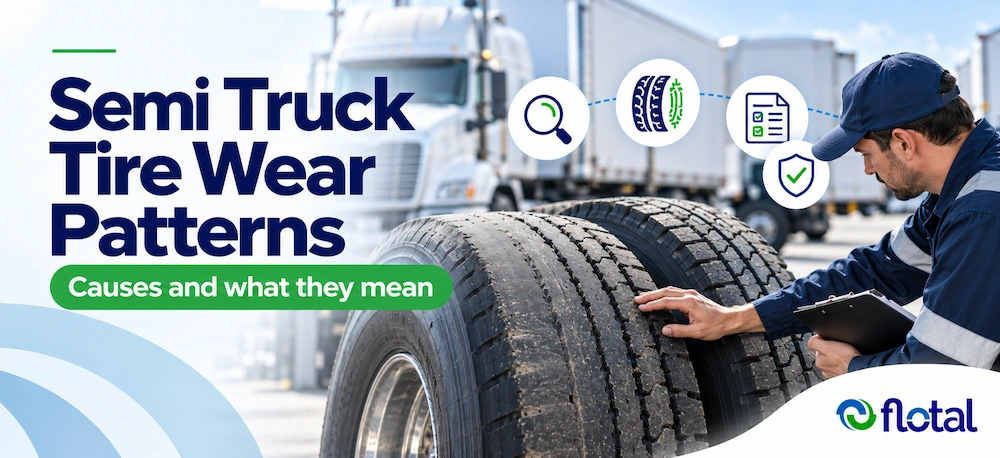
Semi Truck Tire Wear Patterns: Causes and What They Mean

Semi truck tire wear patterns can reveal important information about a vehicle’s operating conditions. Uneven tread wear may indicate inflation problems, wheel misalignment, suspension issues, braking conditions or other mechanical factors that require attention.
For commercial fleet managers, understanding tire wear patterns is not just about deciding when to replace a tire. It is also about identifying recurring maintenance problems and protecting tire performance across the fleet.
What Do Semi Truck Tire Wear Patterns Reveal?
A tire does not always wear evenly across its tread. The appearance and location of irregular wear can help maintenance technicians identify conditions that deserve further investigation.
Common commercial truck tire wear patterns include:
| Wear pattern | Possible contributing factors | Recommended inspection |
|---|---|---|
| One-sided wear | Wheel or axle alignment | Check alignment and related components |
| Center wear | Inflation, load or operating conditions | Verify pressure against load requirements |
| Shoulder wear | Inflation, loading or mechanical conditions | Inspect pressure, load and wheel assembly |
| Cupping or scalloping | Suspension, wheel-end or assembly conditions | Inspect shocks, bearings and tire assembly |
| Feathering | Toe alignment or lateral forces | Check wheel and axle alignment |
| Diagonal wear | Alignment, wheel-end or braking conditions | Inspect alignment and mechanical components |
These relationships are diagnostic indicators, not definitive diagnoses. Michelin’s commercial truck tire wear guide documents how similar patterns can have different causes depending on tire position and vehicle conditions.
A qualified inspection should determine the underlying problem before corrective action is selected.
Common Steer Tire Wear Patterns and Their Possible Causes
Steer tires operate under conditions that influence vehicle direction and handling.
One-sided wear, for example, may be associated with alignment conditions such as camber, toe or axle parallelism.
Feathering occurs when the edges of the tread ribs develop an uneven, directional wear pattern. It may indicate sustained lateral forces associated with alignment.
Cupping or localized depression wear can suggest a need to inspect suspension components, wheel bearings, tire mounting or assembly balance.
When steer tire wear becomes irregular, the maintenance team should examine the tire and the related vehicle components rather than automatically assuming the tire itself is defective.
Replacing a damaged or worn tire without correcting an underlying mechanical problem may allow the same pattern to return.
Drive Tire Wear Patterns: What Fleet Managers Should Check
Drive tires transmit power to the road, so their wear patterns can reflect traction demands, torque, loading and tire assembly conditions.
Heel-and-toe wear appears when the individual tread blocks develop different heights at their leading and trailing edges. It may be associated with operating conditions, inflation or differences between tires mounted in dual assemblies.
Cupping or alternating lug wear can indicate a need to inspect inflation pressure, dual tire matching and mechanical conditions.
Cuts and tread chunking may appear in demanding applications involving rough surfaces. The tire specification and operating environment should be reviewed before deciding whether the tire remains suitable for service.
Drive tire inspection records should identify which axle and wheel position experienced the problem. This information becomes particularly useful when similar irregular wear repeatedly appears in the same location.
Trailer Tire Wear Patterns and Related Mechanical Issues
Trailer tires can experience irregular wear associated with axle alignment, braking, suspension condition and wheel-end maintenance.
Diagonal wear can develop when mechanical or alignment conditions cause localized areas of the tread to wear faster.
Brake skid damage may produce a more concentrated area of abrasion. Cupping and shoulder depression can also indicate a need to inspect inflation, wheel bearings or suspension components.
Because trailers may operate behind different tractors and accumulate mileage under varying conditions, consistent tire inspections are necessary to understand their actual service history.
A record of the affected tire, trailer identification, wheel position and observed condition can help maintenance teams identify repeated problems.
How to Diagnose Uneven Tire Wear Before Replacing a Tire
A useful inspection process begins with documenting the visible condition and reviewing relevant operating data.
The technician should:
- Identify the wear pattern and its location across the tread
- Measure tread depth at appropriate points
- Check inflation pressure using the correct load and tire specifications
- Inspect the applicable wheel-end, suspension, steering or brake components
- Review prior tire and vehicle maintenance records
- Determine the appropriate corrective action and whether the tire remains serviceable
The inspection should distinguish between a tire that is safe to continue using, one that requires corrective maintenance and one that must be removed from service.
For the regulatory and retirement aspects of that decision, consult our upcoming guide to semi truck tire tread depth (internal link pending).
How to Prevent Recurring Irregular Tire Wear
Preventing recurring wear requires more than correcting individual tires.
A fleet should establish consistent inspection procedures, maintain appropriate inflation, address wheel and axle alignment, and investigate recurring mechanical conditions.
Pressure and temperature monitoring can also provide useful information. Flotal’s TPMS solutions for commercial trucks monitor these variables as a complementary technology.
However, TPMS does not replace physical tread inspections or mechanical diagnosis.
How Tire Control Software Helps Identify Recurring Wear Problems
For a fleet operating multiple trucks and trailers, scattered inspection records can make recurring patterns difficult to recognize.
Flotal’s tire control software organizes individual tire histories, vehicle positions, inspections, tread depth records, maintenance movements and performance information.
Centralized records allow maintenance managers to review where irregular wear has been observed and investigate whether similar conditions appear on particular vehicles, positions or operating applications.
This creates an operational connection between tire condition and fleet maintenance decisions.
Semi truck tire wear patterns are valuable maintenance indicators. The greatest benefit comes from inspecting the tire, verifying the cause, correcting contributing conditions and maintaining reliable records of what happened.
Discover how Flotal’s tire management software helps fleets organize tire inspections, histories and operating information.
Más artículos
Ver todos →
How Long Do Semi Truck Tires Last?
Maximizing Tire Life and Value How long do semi truck tires last? There is no universal mileage or service period that applies to every commercial truck ti…
Tire Inventory Management
How to Track Every Fleet Tire? Tire inventory management helps commercial fleets know which tires they own, where each tire is located, which vehicle it is…
Semi Truck Tire Tread Depth
Are You Retiring Tires Too Early? Semi truck tire tread depth is an important measurement for evaluating tire condition and determining whether a commercia…