
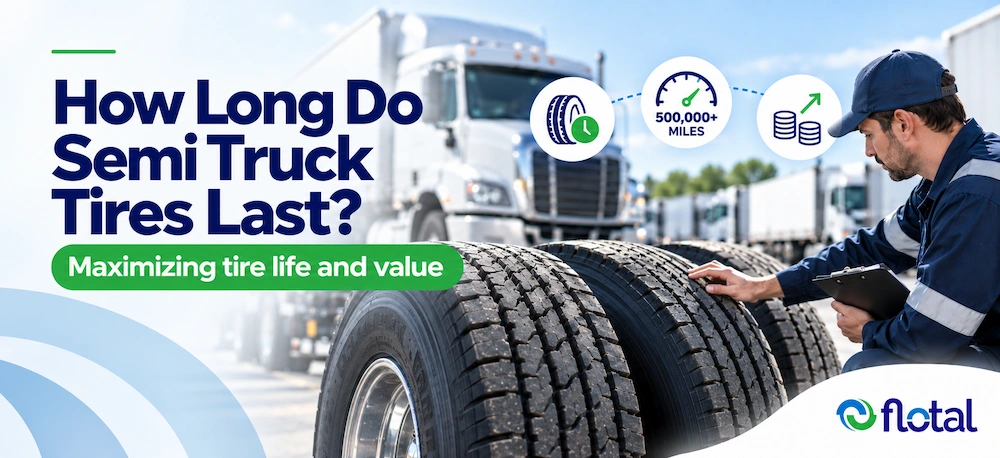
How Long Do Semi Truck Tires Last?

Maximizing Tire Life and Value
How long do semi truck tires last? There is no universal mileage or service period that applies to every commercial truck tire. Actual tire life depends on tire design, axle position, operating conditions, load, inflation pressure, maintenance and the condition of the vehicle.
For fleet managers, understanding tire lifespan is important because the objective is not simply to accumulate miles. It is to obtain reliable performance, preserve tire condition and make economically sound decisions throughout the tire’s service life.
How Long Do Semi Truck Tires Typically Last?
Commercial truck tires may accumulate substantial mileage, but their actual service life varies widely.
As an illustrative industry reference, U.S. commercial tire service provider Cook Tire published the following estimates in March 2026 for properly maintained tires under typical highway conditions:
| Tire position | Illustrative mileage range |
|---|---|
| Steer tires | 100,000–150,000 miles |
| Drive tires | 80,000–120,000 miles |
| Trailer tires | 100,000–120,000 miles |
These are estimates from one service provider, not universal industry standards, guaranteed mileage or recommended replacement intervals.
Actual results may differ substantially according to tire design and application. Some tire models and operating conditions can achieve much greater mileage, while severe service may produce much shorter service life.
Michelin’s commercial tire guidance also emphasizes the importance of application, operating conditions and maintenance rather than a single universal mileage figure.
The useful question for a fleet is therefore not only how long a tire should last, but how long comparable tires actually last in its own operation.
What Factors Affect Commercial Truck Tire Lifespan?
Several factors influence the useful life of a commercial truck tire.
Inflation pressure
Operating outside the appropriate pressure range can affect wear, heat generation and tire condition. The correct pressure must be determined from applicable tire and load specifications.
Vehicle alignment and mechanical condition
Alignment, suspension and wheel-end issues may contribute to irregular wear and premature tire removal.
Load and operating conditions
The loads carried, road surfaces, route characteristics and frequency of stopping or maneuvering can influence wear.
Tire specification
Tread design, construction and intended application affect performance. Tires must be selected according to the vehicle and operating requirements.
Maintenance practices
Regular inspection and timely correction of mechanical or inflation problems help fleets identify conditions that may shorten tire service life.
A tire with reduced mileage is not necessarily a defective product. The complete operating conditions must be reviewed before determining why performance differs.
How Tire Position and Operating Conditions Influence Mileage
Steer, drive and trailer tires experience different operating demands.
Steer tires are affected by steering forces, alignment and front-axle operating conditions.
Drive tires transmit torque and may be affected by traction demand, wheel spin and dual tire matching.
Trailer tires can experience scrub, alignment-related wear, curb contact and other conditions associated with their applications.
A meaningful lifespan comparison should therefore group tires by their operating position and application.
Comparing a long-haul drive tire with a trailer tire used in regional delivery may produce misleading conclusions if the differences in operating conditions are ignored.
How Preventive Maintenance Can Help Extend Tire Life
Preventive maintenance helps a fleet identify problems before they cause unnecessary wear or damage.
A consistent program should include inspection of tread condition, inflation pressure, visible damage and applicable vehicle components.
Irregular wear deserves particular attention because it may indicate mechanical or operating issues that continue affecting replacement tires.
Flotal’s TPMS solutions provide pressure and temperature monitoring as a complementary technology. Physical inspections, maintenance records and qualified technical assessments remain necessary.
When maintenance teams document recurring problems, they can investigate whether specific vehicles, routes or tire positions require corrective action.
How Retreading Can Contribute to Total Tire Lifecycle Value
The useful life of a commercial tire casing may extend beyond its first tread.
Retreading involves replacing worn tread after the casing has been professionally inspected and determined to be suitable for additional service.
This can allow an eligible casing to complete more than one service cycle.
However, not every tire qualifies for retreading. Casing damage, structural condition, previous repairs and other factors must be evaluated by qualified professionals.
Michelin’s commercial truck retreading guidance explains the importance of casing inspection, appropriate maintenance and lifecycle planning.
For fleets that use retreads, the economic value of a tire may depend on more than its first installation period. The number of acceptable service cycles, accumulated mileage and total lifecycle expenses all contribute to the evaluation.
How to Measure Tire Lifespan and Evaluate Fleet Performance
To evaluate how long semi truck tires last in a particular operation, fleet managers should maintain individual records containing:
- Tire identification, specification and purchase information
- Vehicle and wheel position
- Installation and removal dates
- Accumulated mileage by service cycle
- Inspection and maintenance history
- Repairs and retreads
- Final retirement reason
These records help distinguish a tire that reached its planned service limit from one removed early because of damage, irregular wear or another condition.
Managers can then compare performance among equivalent tire models, positions and operating applications.
When financial evaluation is required, mileage and expense records can also support an analysis of tire cost per mile. That calculation is explained in our separate article (internal link pending).
How Flotal Helps Fleets Manage the Complete Tire Lifecycle
Flotal’s tire control software centralizes individual tire histories, installations, removals, inspections, repairs, retreads, mileage and cost records.
This information helps fleet managers understand how each tire has been used, review performance by service cycle and evaluate the causes of premature removals.
For operations with multiple vehicles and tire positions, maintaining a complete history also helps prevent useful information from being lost when tires are transferred or removed.
Maximizing tire life does not mean keeping unsafe tires in service. It means applying appropriate maintenance, identifying avoidable problems and using reliable records to support safe, efficient tire decisions.
Learn how Flotal’s tire management software supports tire lifecycle tracking and performance analysis for commercial fleets.
Más artículos
Ver todos →
Tire Inventory Management
How to Track Every Fleet Tire? Tire inventory management helps commercial fleets know which tires they own, where each tire is located, which vehicle it is…
Semi Truck Tire Tread Depth
Are You Retiring Tires Too Early? Semi truck tire tread depth is an important measurement for evaluating tire condition and determining whether a commercia…
Semi Truck Tire Wear Patterns: Causes and What They Mean
Semi truck tire wear patterns can reveal important information about a vehicle’s operating conditions. Uneven tread wear may indicate inflation probl…