
Trucks with up to 6 tires
Compact systems for light and medium units that require individual pressure and temperature monitoring.
Improve the safety and profitability of your fleet with a system that monitors tire pressure and temperature in real time. It combines specialized hardware with our management platform to prevent failures, reduce operating costs and centralize preventive control according to the needs of your operation.
Tell us the unit type and number of tires so we can recommend a suitable configuration.
Without constant monitoring, a critical tire can cause breakdowns, delays and unplanned costs.
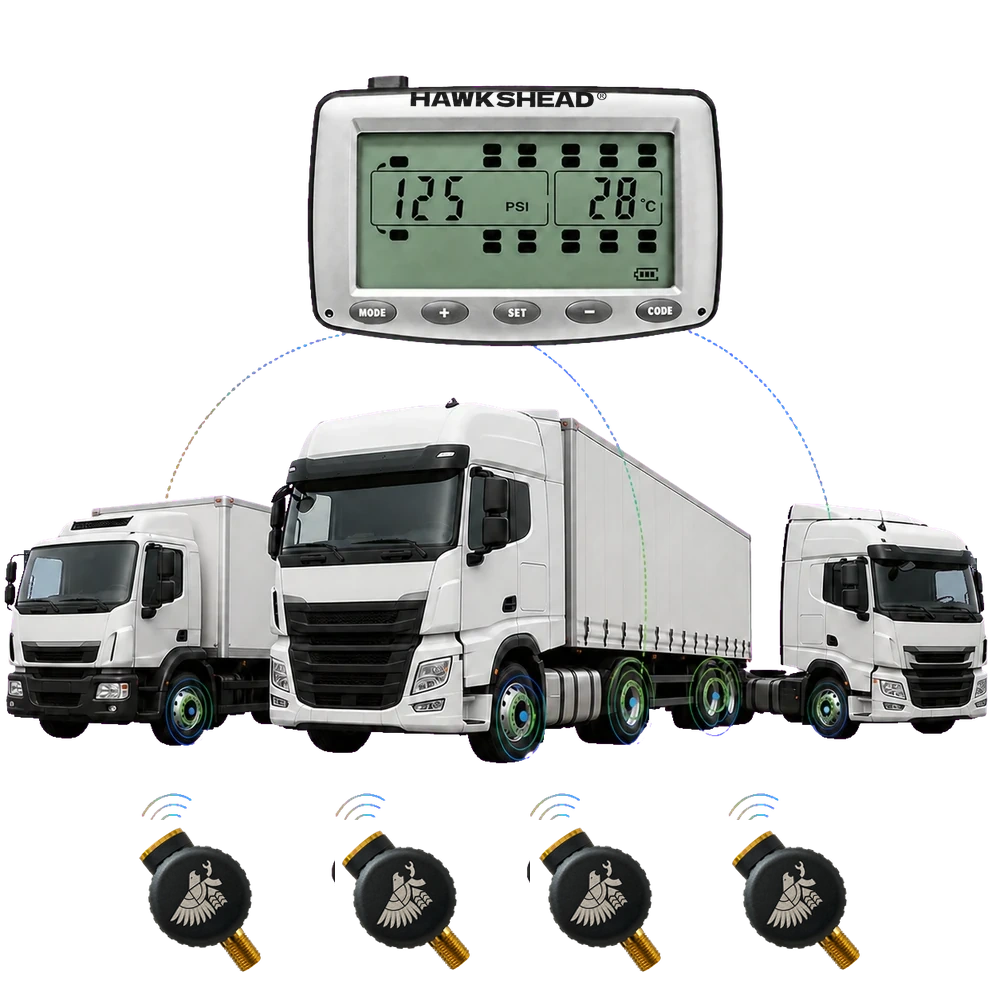
Not every truck needs the same monitor, sensor count or signal range. The configuration must be selected considering the number of tires, the distance between the cab and the trailer, the valve type and the working pressure.
Compact systems for light and medium units that require individual pressure and temperature monitoring.
Configurations to monitor semi-truck positions with sensors installed directly on the valves.
Expandable systems to monitor tractor and trailer tires from a monitor installed in the cab.
Equipment with capacity for more positions, plus accessories to improve communication between sensors and monitor.
Pressure and temperature monitoring for passenger transport units with multiple tire positions.
Sensors and valves for working conditions that require greater durability, high pressure or large-diameter connections.
A truck TPMS system individually monitors tire pressure and temperature during operation.
Sensors installed on each valve transmit the information to a monitor, which identifies the tire position and generates alerts when it detects a condition outside the configured parameters.
Unlike the basic systems used in cars, a heavy-transport TPMS must work with more wheels, longer transmission distances, higher operating pressures and configurations that may include a semi-truck, trailer, semi-trailer or dolly.
Without constant monitoring, a critical tire can cause breakdowns, delays and unplanned costs. Incorrect pressure accelerates wear and reduces tire lifespan.
A tire that fails in operation stops the unit and disrupts the entire plan.
Out-of-range pressure shortens tire lifespan and compromises the casing.
Manually checking every unit every day is not always feasible.
Each sensor records the pressure and temperature of the position where it is installed.
The monitor receives the readings and displays the status of the tires defined in the unit configuration.
When a tire shows low pressure, high pressure, elevated temperature or rapid air loss, the system raises a warning.
The alert allows inspecting the unit and making a decision before the condition damages the tire, strands the unit on the road or ruins the casing.
Each sensor reports more than a number: combining pressure, temperature and behavior over time is what makes it possible to anticipate a failure.
Reading per position and per unit to detect significant differences.
A temperature rise can indicate critical conditions requiring attention.
Historical data to detect patterns, slow leaks or associated wear.
Battery confirmation, connectivity and pending reports.
The final selection depends on
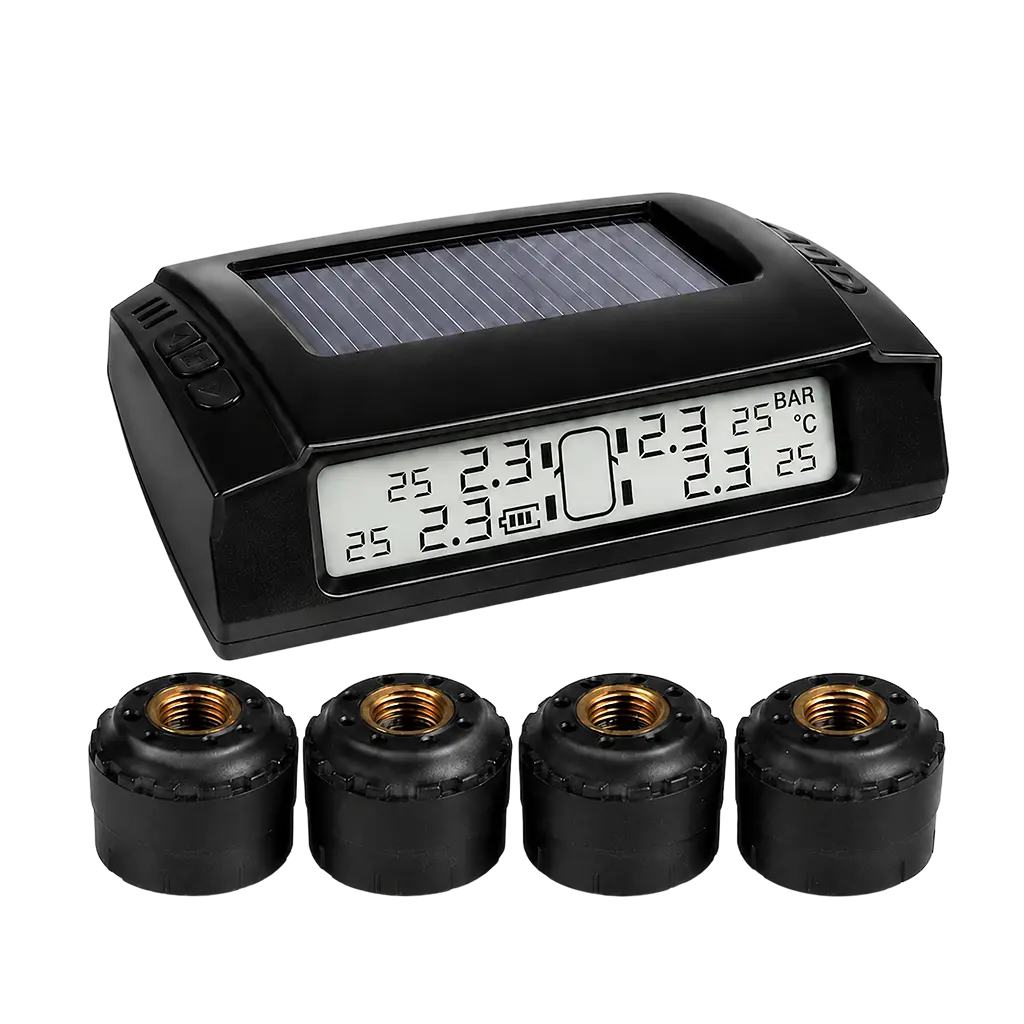
A monitoring system for light vehicles and support units with a small number of tires. It can include a solar-powered monitor and external sensors installed on the valves.
It is an alternative for simple configurations that do not require the capacity of a system designed for semi-trucks and trailers.
Request a Solar TPMS quoteIdeal for
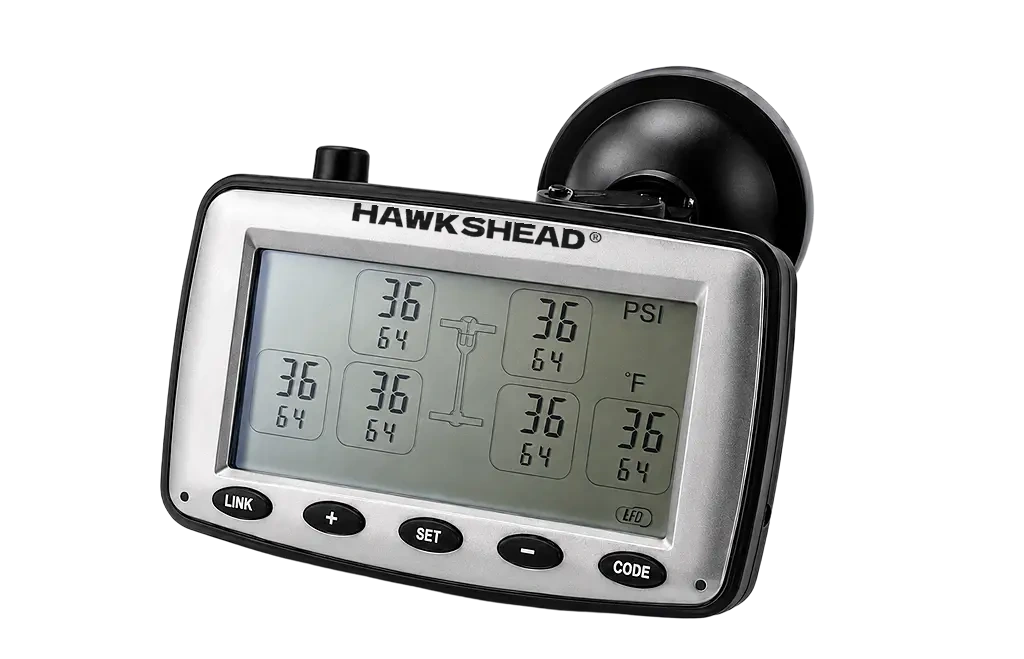
A TPMS system for light and medium trucks, able to monitor up to 6 positions.
The sensors transmit pressure and temperature information to the monitor to identify abnormal conditions during operation.
Request a Talon 6 quoteIdeal for
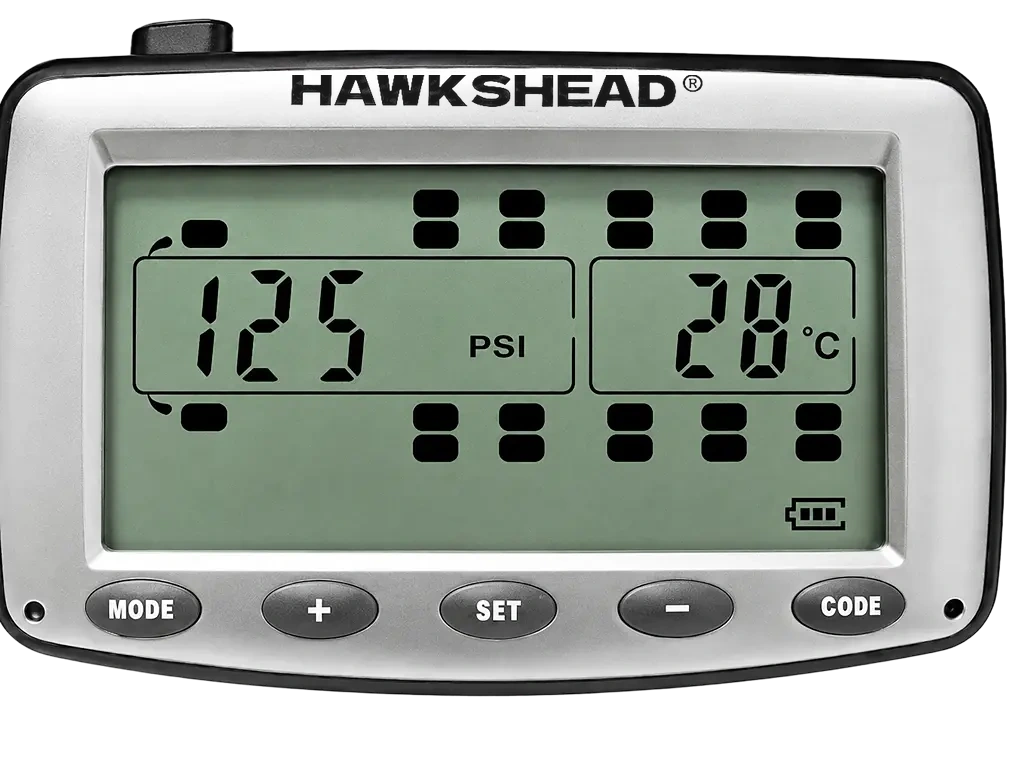
A TPMS system designed for semi-trucks, trailers and heavy-transport configurations.
It can handle anything from basic setups to systems with 22 sensors, depending on the number of tires and the structure of the unit. It can be complemented with additional sensors, compatible valves and a signal booster when the distance between the trailer and the monitor requires it.
Request a Talon 22 quoteIdeal for
A TPMS system for extended configurations and operations with a larger number of wheels.
It is aimed at semi-trucks with trailers, dollies, multi-section combinations and applications that require monitoring more positions than a conventional system.
Request an X-Treme 38 quoteIdeal for
The configuration may vary depending on the unit type and the number of tires.
It receives the sensor information, shows each position and generates alerts during operation. The Flotal app lets you see your TPMS monitor data on your phone.
They are installed on the valves to monitor each tire individually. There are different sensor types depending on pressure, valve type and working conditions.
See the pressure sensors for truck tiresThe valve must be compatible with the sensor, the wheel and the access needed to inflate the tire. There are different valves such as metal ones, T-type adapters, extensions or solutions for dual wheels.
See the valves for your truck tiresIt helps improve communication between the sensors and the monitor when there is a considerable distance between the cab and the trailer.
It may be recommended for
The system identifies a drop in pressure before the tire reaches a critical condition.
An abnormal temperature rise can be related to low pressure, friction, brakes, bearings or other mechanical conditions that need review.
Running a tire with insufficient pressure can cause damage that affects its retreading potential.
TPMS provides individual readings on the road, without relying only on visual checks or thumping the tire.
Detecting an abnormal condition allows scheduling a review before the unit is stranded on the road.
Keeping pressures within the defined parameters helps control wear, service life and fuel consumption.
The monitor identifies tires by their position on the truck, semi-truck or trailer.
TPMS systems can be used as a standalone solution to show pressure, temperature and alerts to the driver. They can also be combined with Flotal to centralize operational control of the fleet tires.
Flotal can be contracted as standalone software, a standalone TPMS reader or as a combined solution.
TPMS does not replace safety checks, gauge calibration or tire maintenance: it is a safety and prevention tool.
A solution adaptable to trucks, buses, machinery and specialized operations.
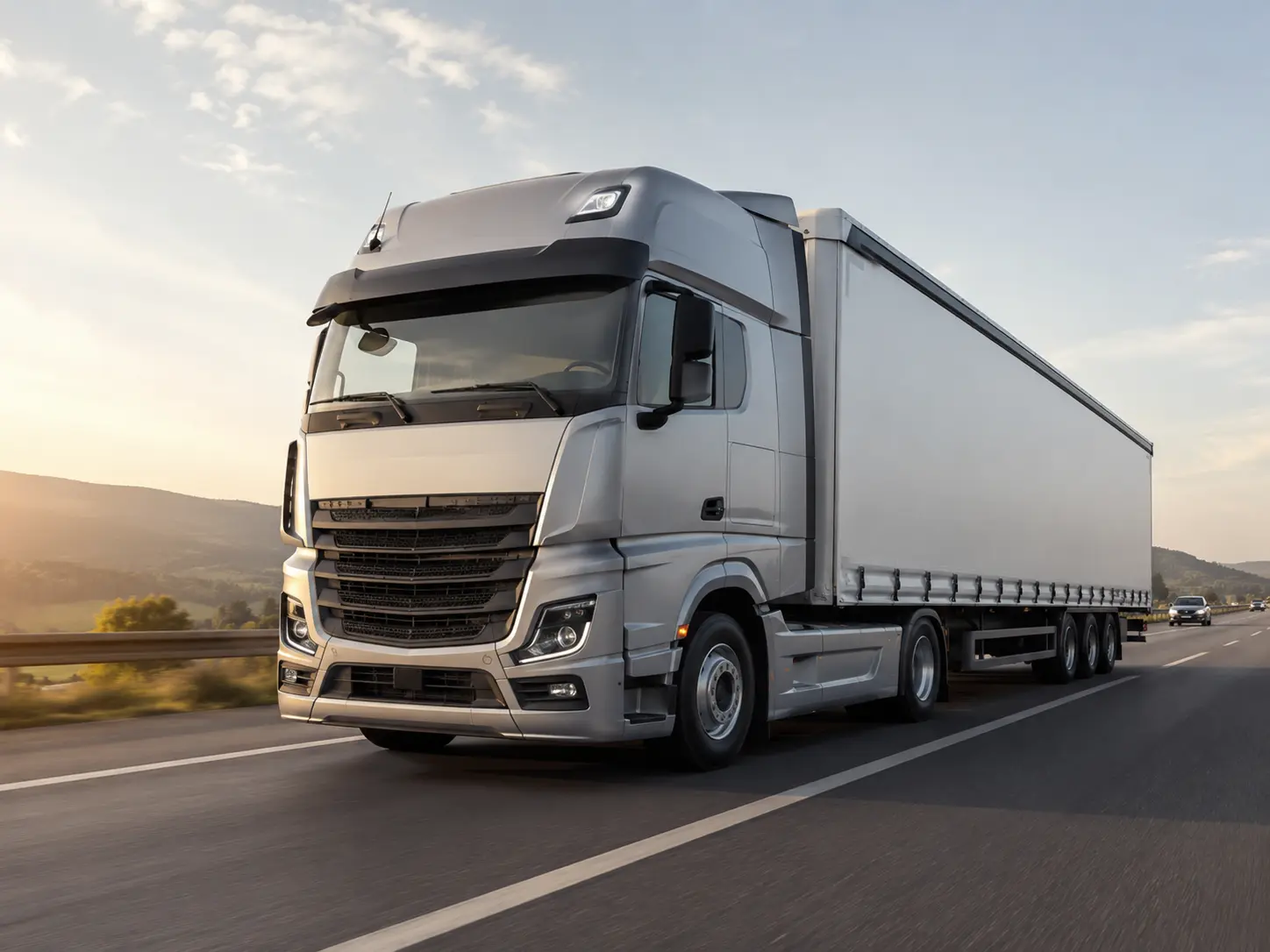
Featured operation
Trucks, tractor-trailers and logistics operators.
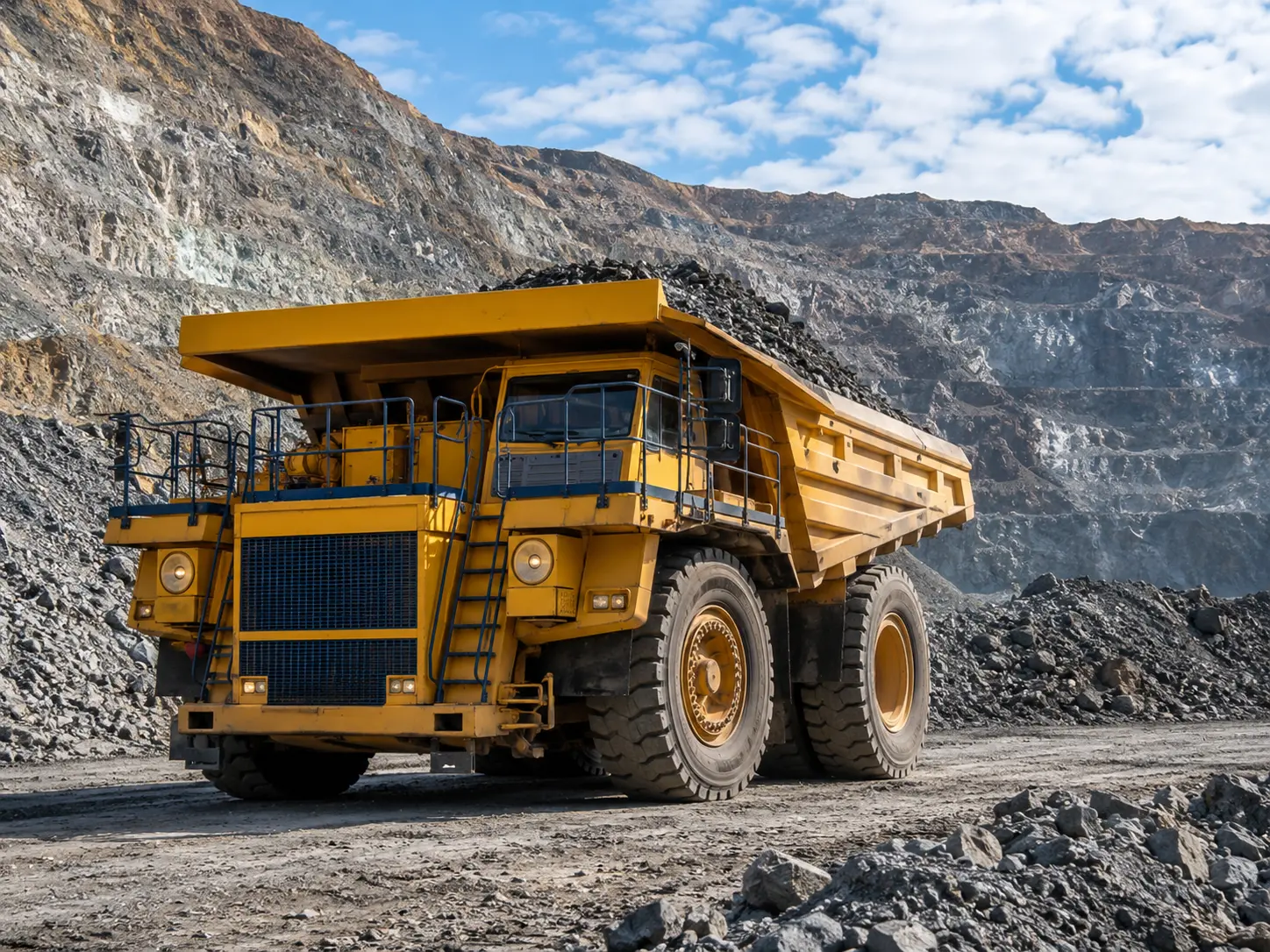
Operations with OTR tires and heavy machinery.

City buses, intercity routes and staff shuttles.
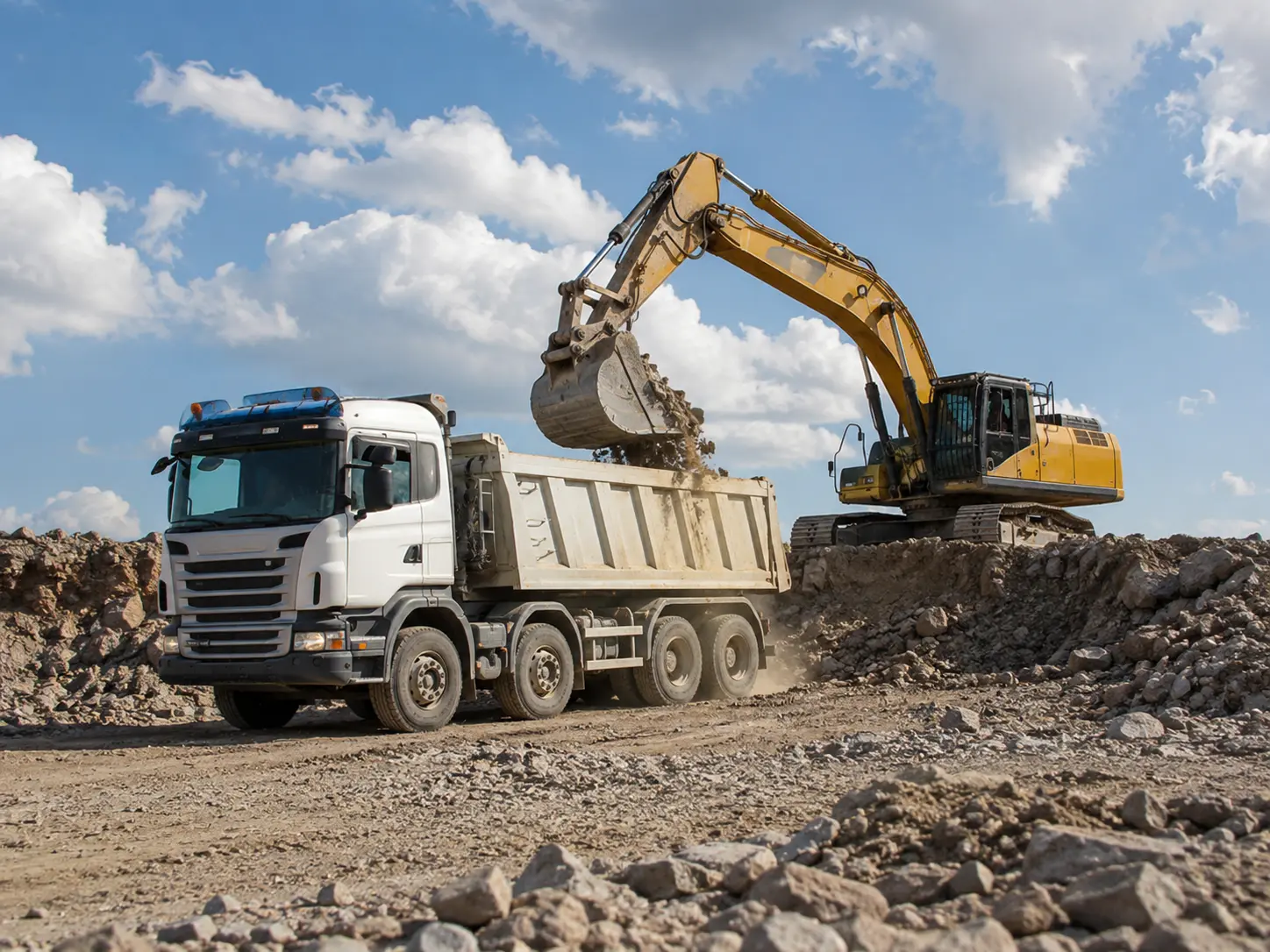
Dump trucks and heavy machinery on site.
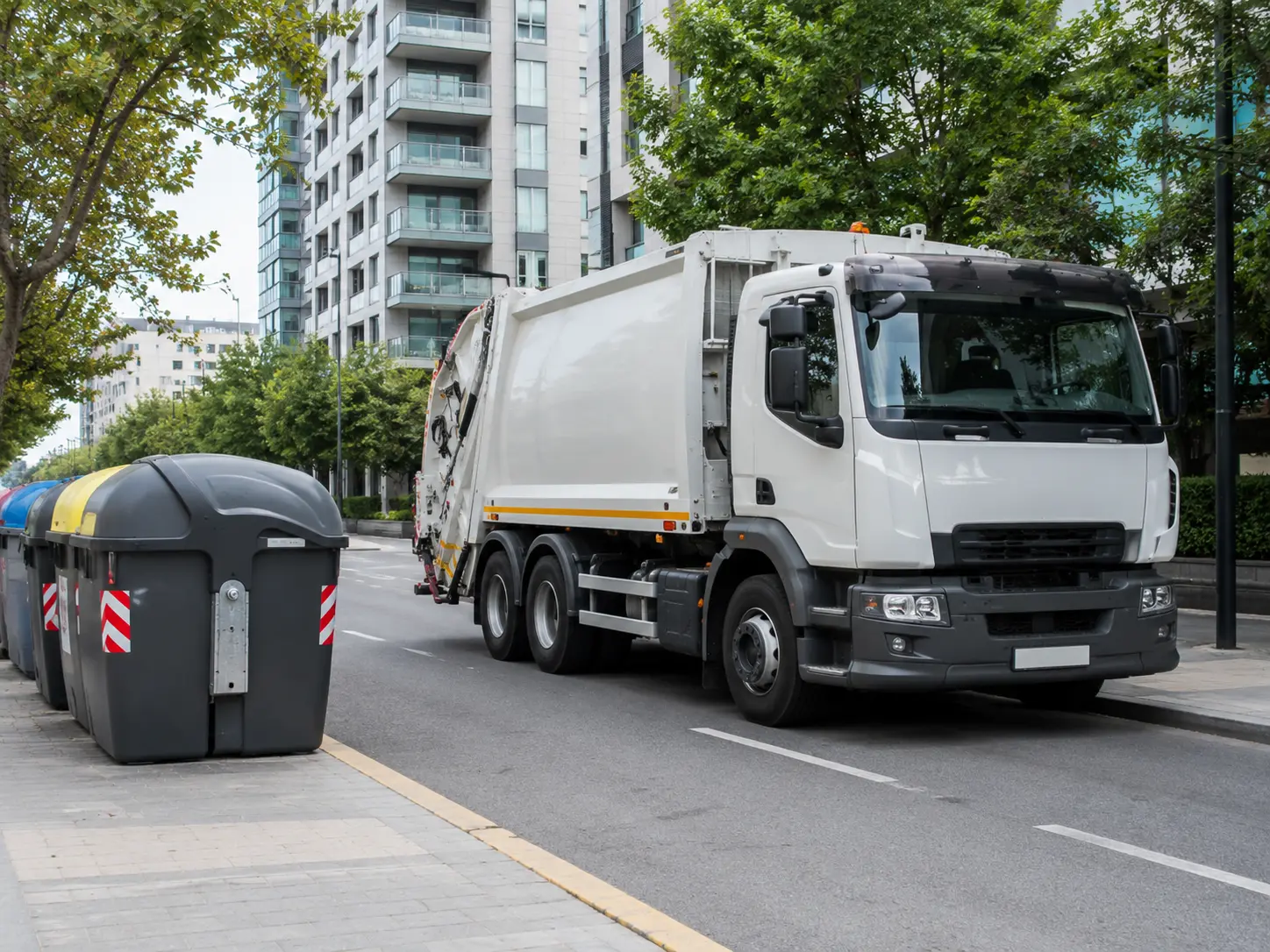
Collection units with frequent stops.
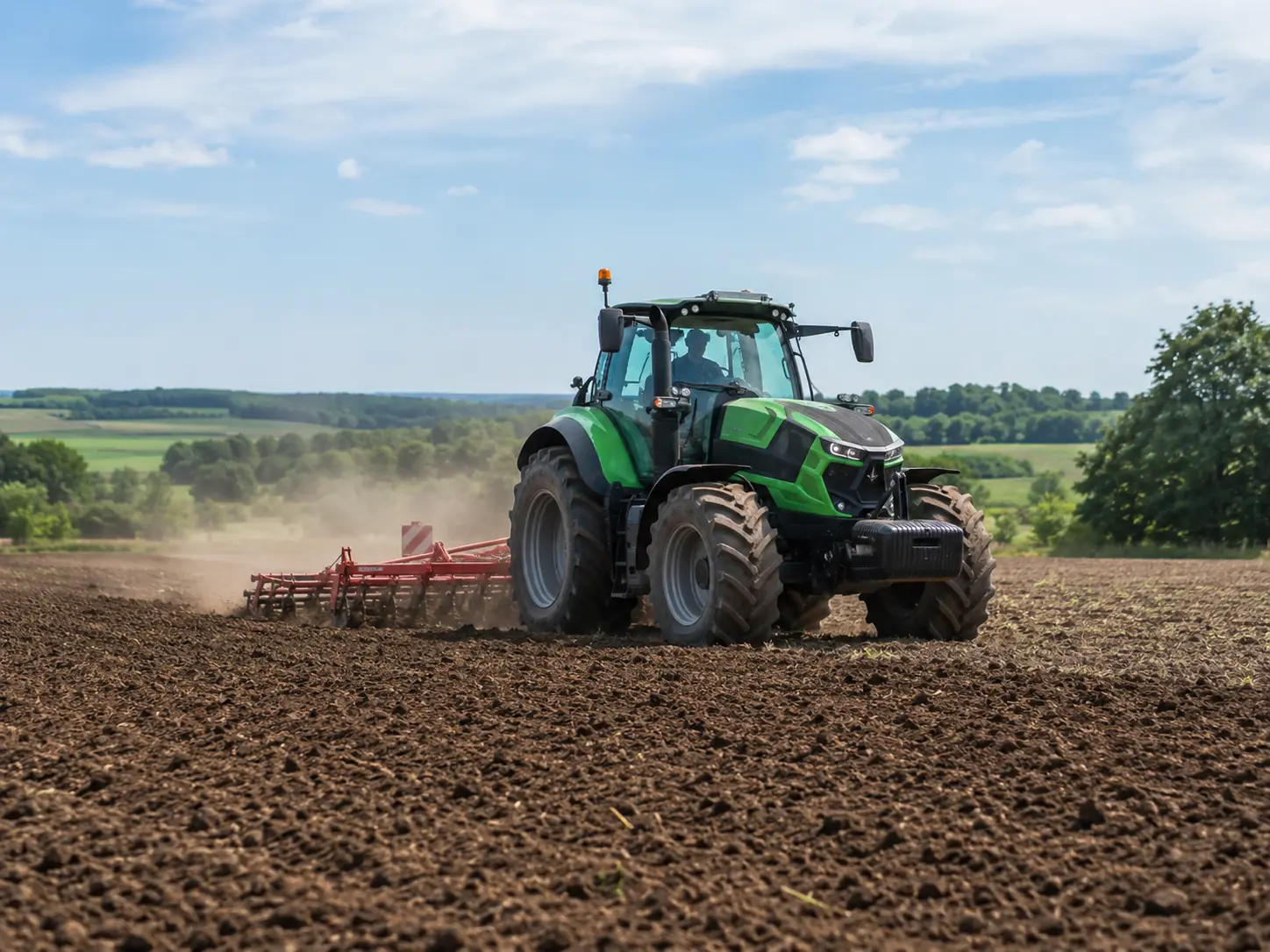
Farm equipment, tractors and field units.
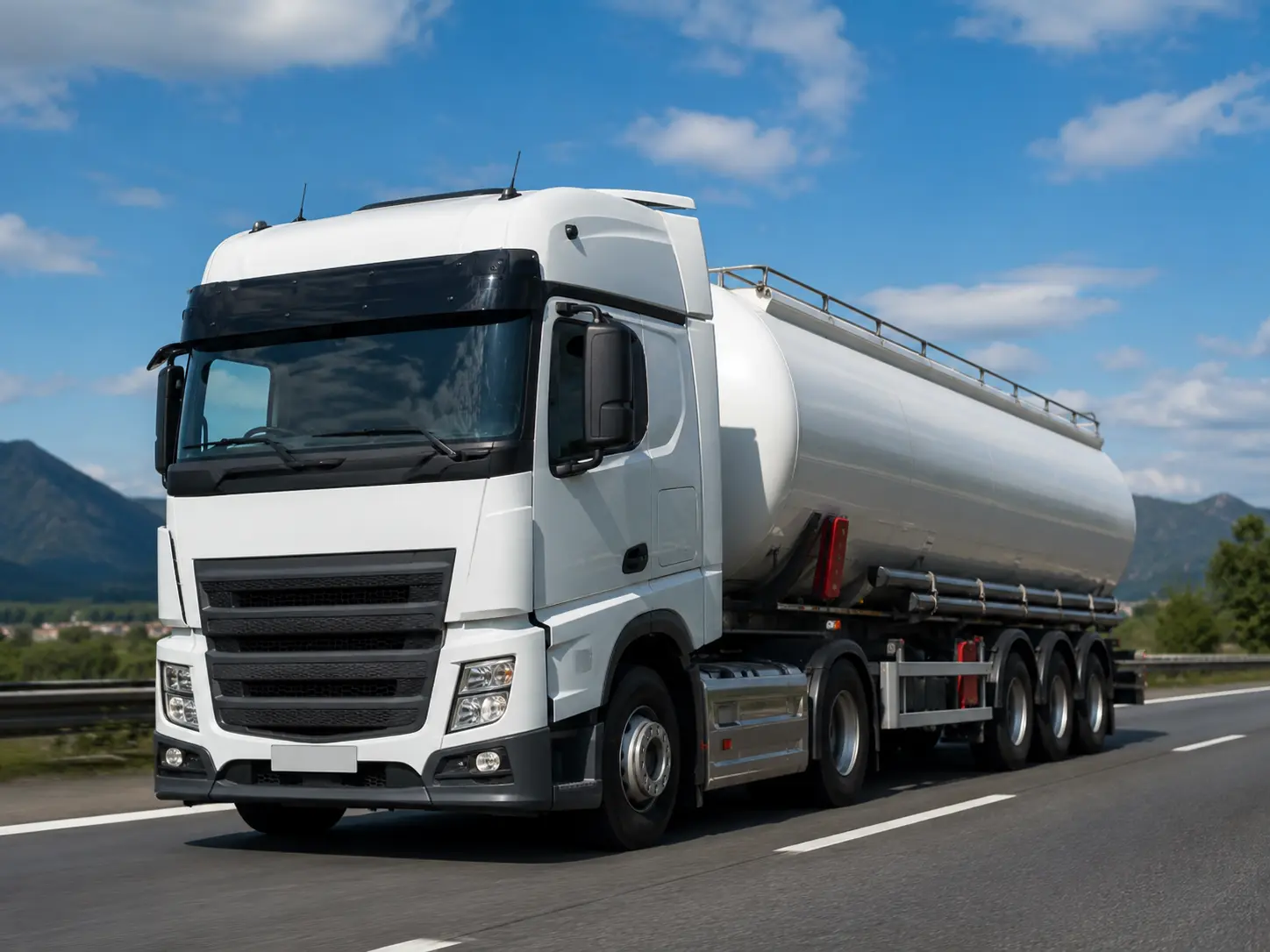
Tank trucks and specialized operations.
Get a recommendation based on unit type, number of tires, trailer configuration, operating pressure and the monitoring needs of your fleet.
We answer the most common questions before you choose your configuration.
Have more questions?
Talk to our team and we will help you choose the right solution for your fleet.
Talk to an advisor